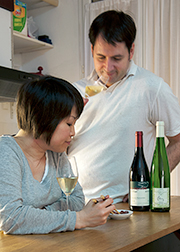
As a French-Japanese couple living in Paris, we often find ourselves exploring the differences in Japanese and western food and drink culture. This blog is where we share our experiences, as well as try out specific wine pairings. In other words: the trial and error section of the site. Feel free to leave a comment!
(日本語) Madame Figaro
June 9th, 2018Basashi with Beaujolais Nouveau 2017
November 19th, 2017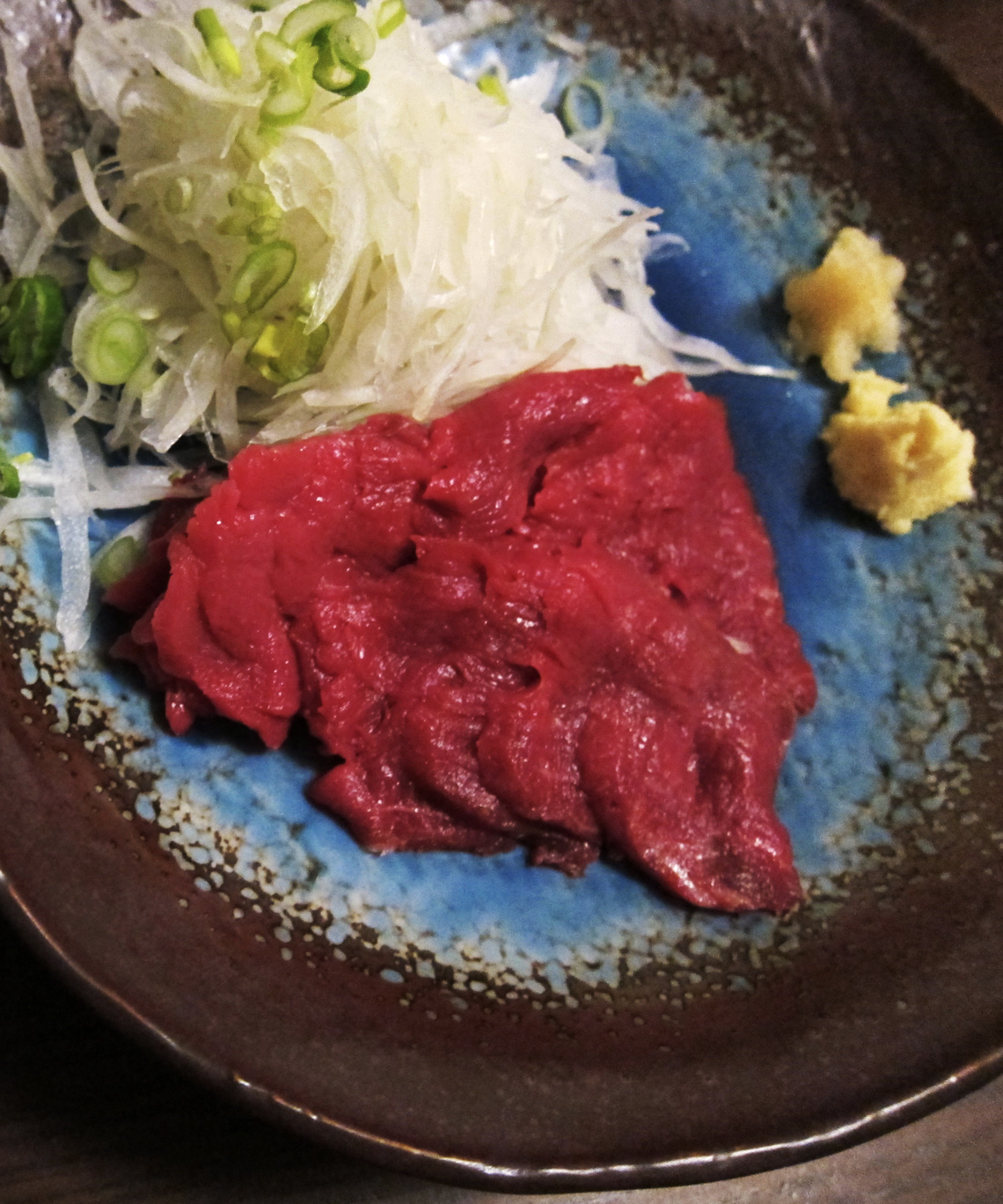
Basashi, horse sashimi, is usually eaten with garlic and ginger in soy sauce.
Beaujolais Nouveau 2017 – Yakitori
November 18th, 2017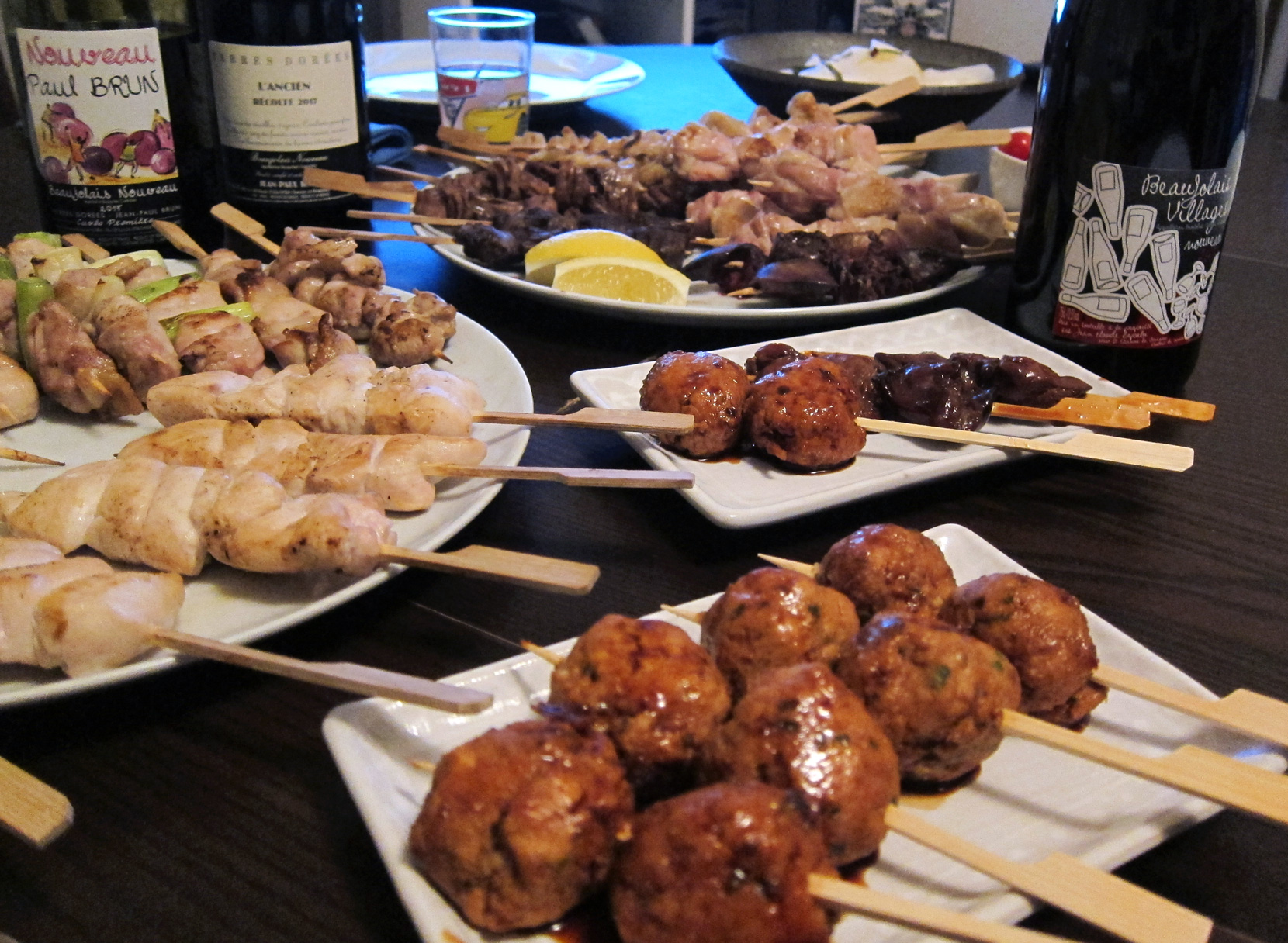
We tried out a variety of yakitori to with the newly released Beaujolais Nouveau wines.
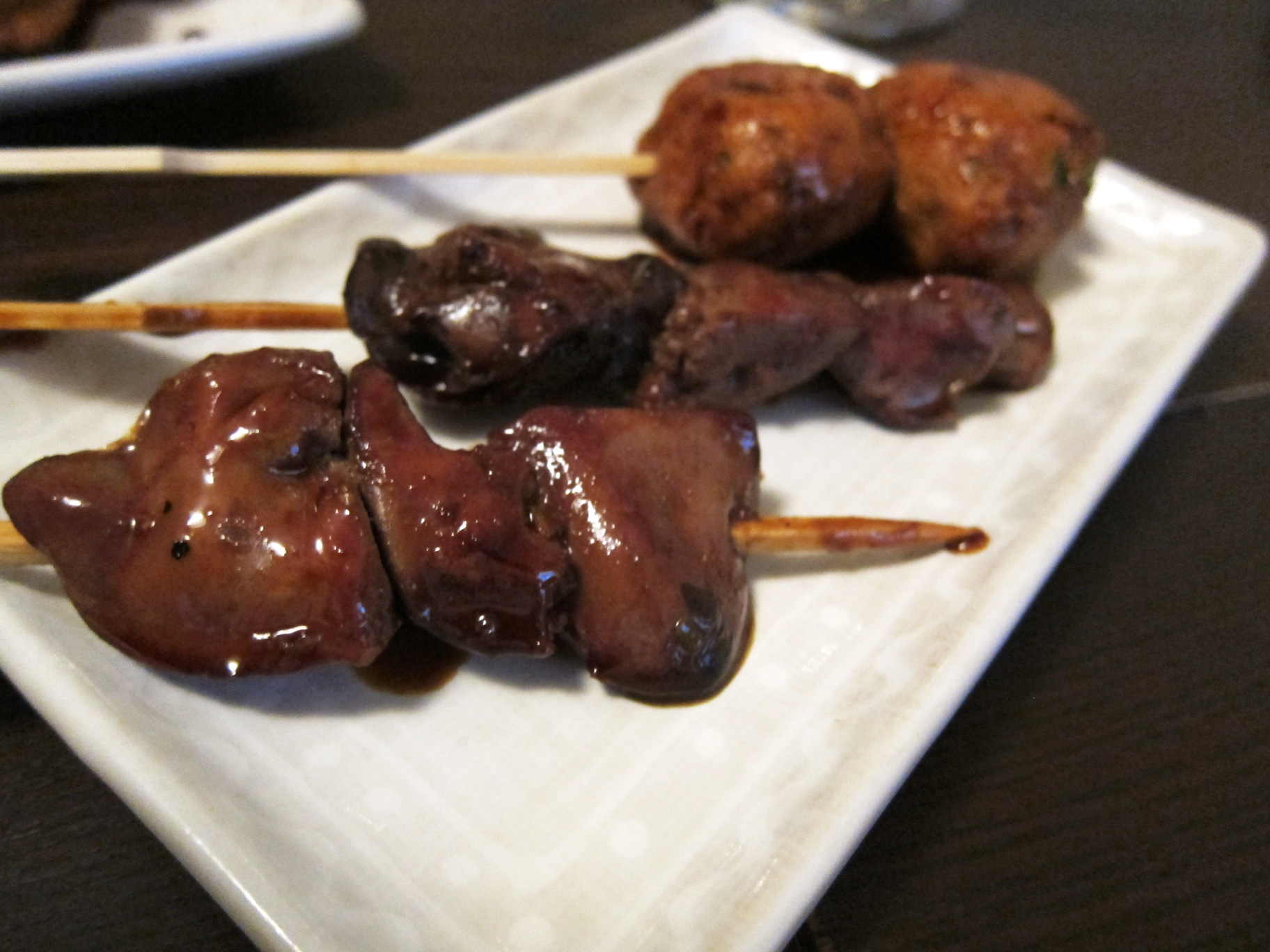
While all the different skewers worked nicely, the star of the show was the chicken liver.
Kobe Beef with Bandol
February 14th, 2016For Valentine’s day this year, I went all out and brought home a nice Kobe steak to try out with a pair of Bandol wines made at the same estate… but 19 years apart. The idea is to see which of the mature or the young, tannic red worked best with wagyu steak.
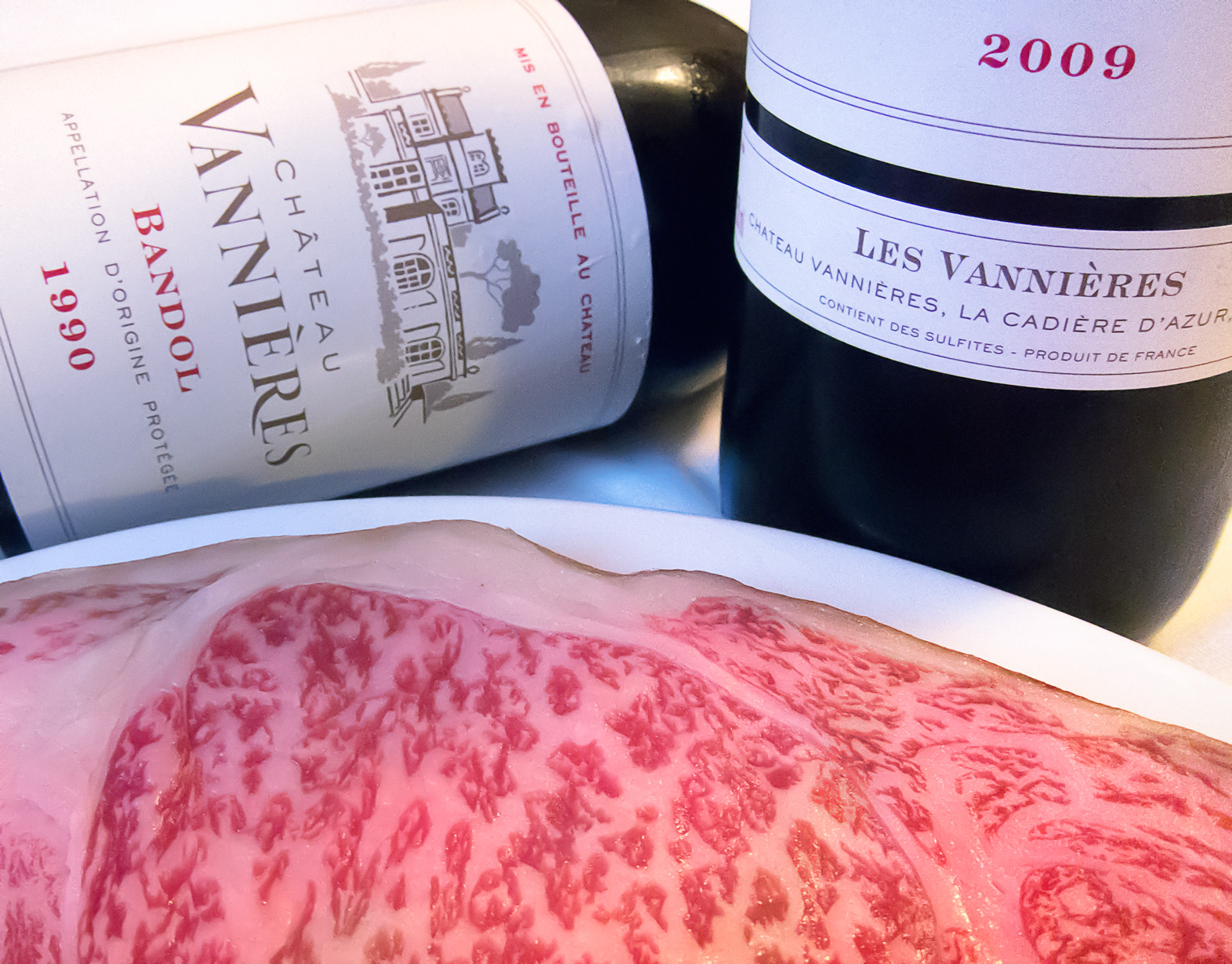
The complex, mature aromas of the 1990 vintage paired beautifully with the pan-seared steak, bringing out its meaty flavors. The acidity, typically more present in older wines, cut through the fat nicely, and worked better overall than the young, fruity 2009 vintage. While the buttery texture of the meat rounded out the younger wine’s tannins, I think it’s more important with wagyu to put the meat on center stage, rather than catering to the wine.
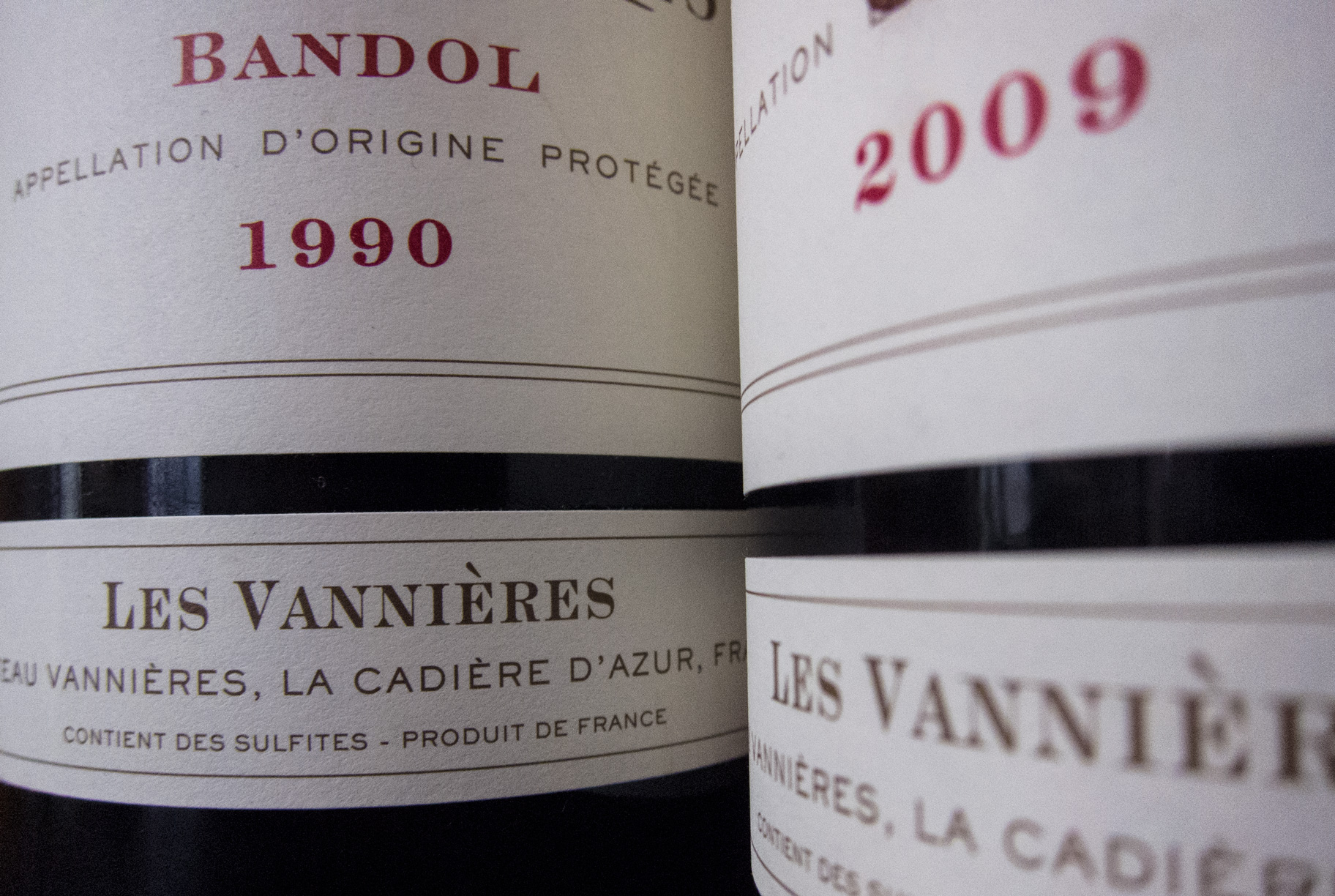
The Bandol appellation in Provence is well-known for its rosé, but the Mourvèdre-based reds are very long lived and quite afforbdable.
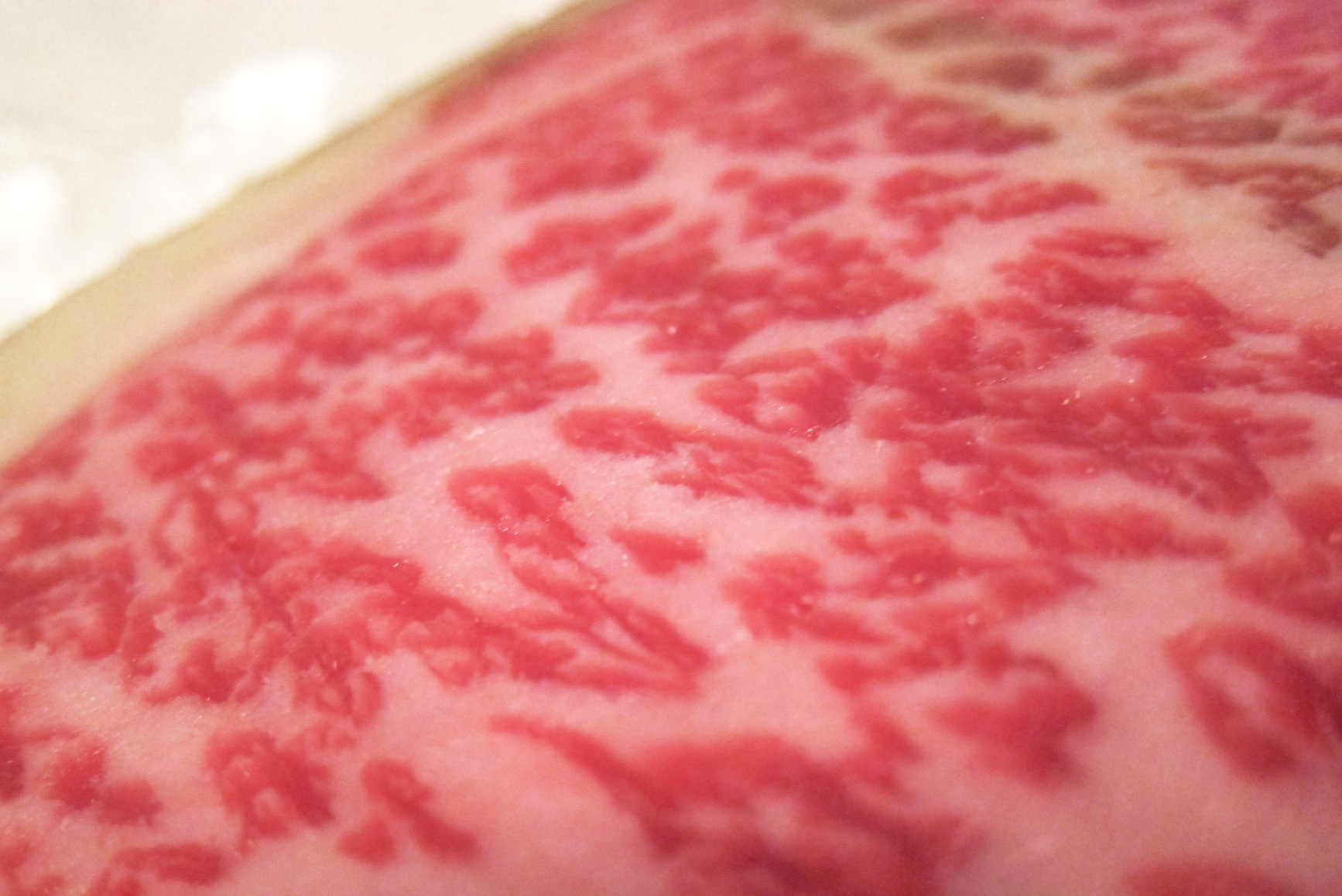
This gorgeous marbled fat is characteristic of wagyu (literally, “japanese beef”) of which the most famous comes from the Kobe area.
Beef Tataki with Chambolle Musigny!
January 24th, 2015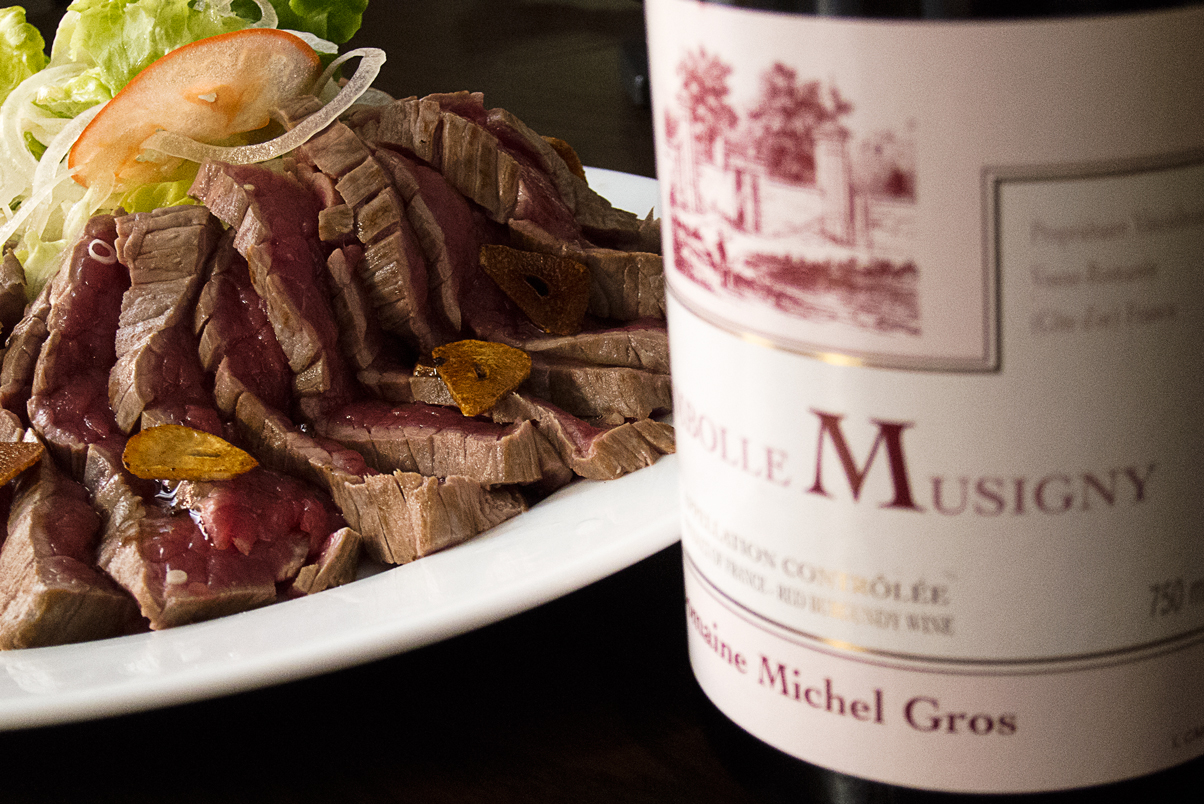
A great match between this 2011 Chambolle-Musigny Burgundy by Michel Gros and the nearly raw beef tataki -gyu no tataki-. While the wine is still a bit austere on the palate, its gentle oak influence combines nicely with the cooked outer layer of the beef. The fruity pinot noir character and the acidity combine perfectly through the red interior of the slices. A touch of yuzu kosho brings out a flavor explosion in the wine, though its subtle complexity is overshadowed.
Tempura with Chablis & Vinho Verde
March 16th, 2014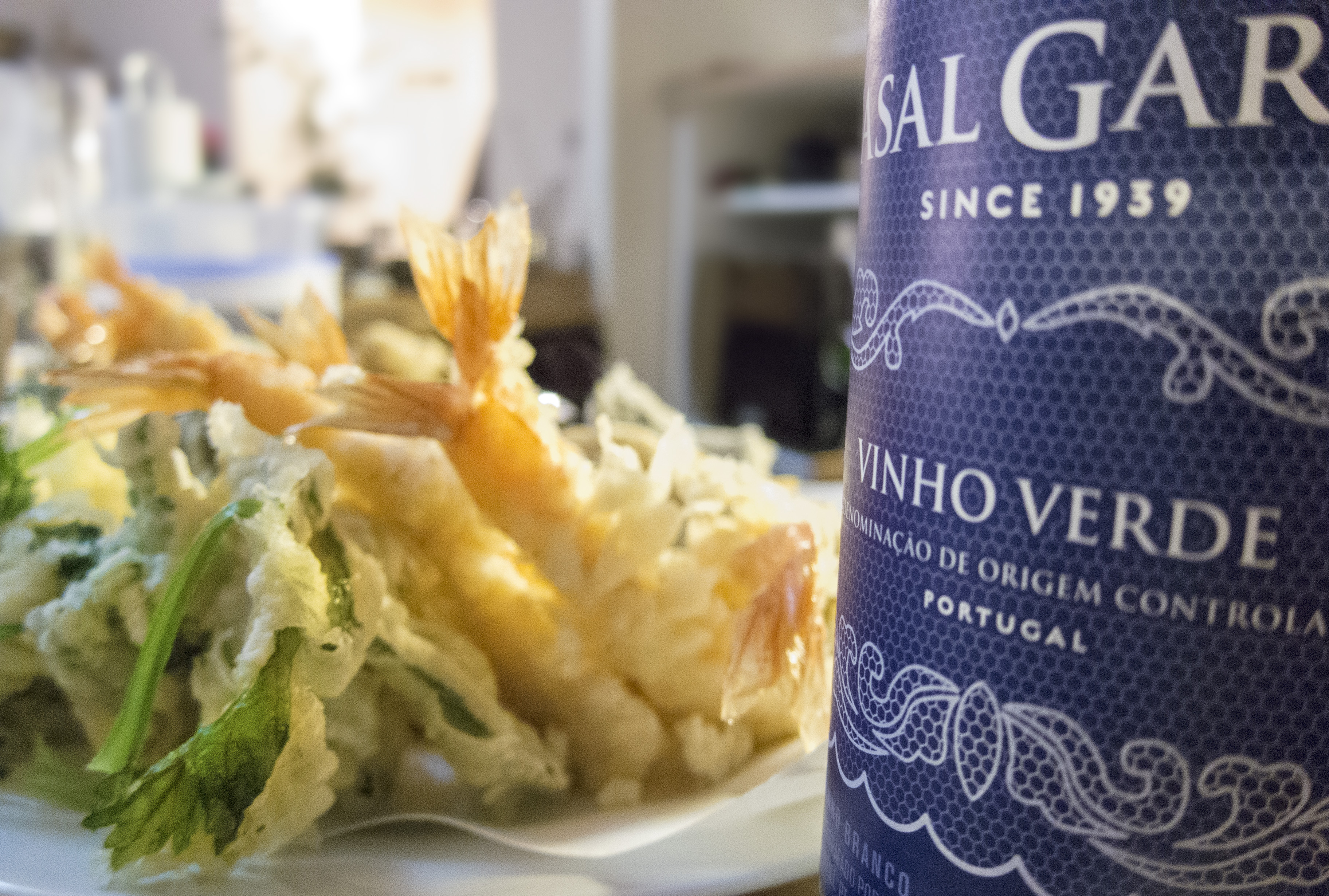
This classic Vinho Verde from Portugal offers low-alcohol and rather neutral profile with a slight spritz. A bit lacking on acidity for the Tempura though…
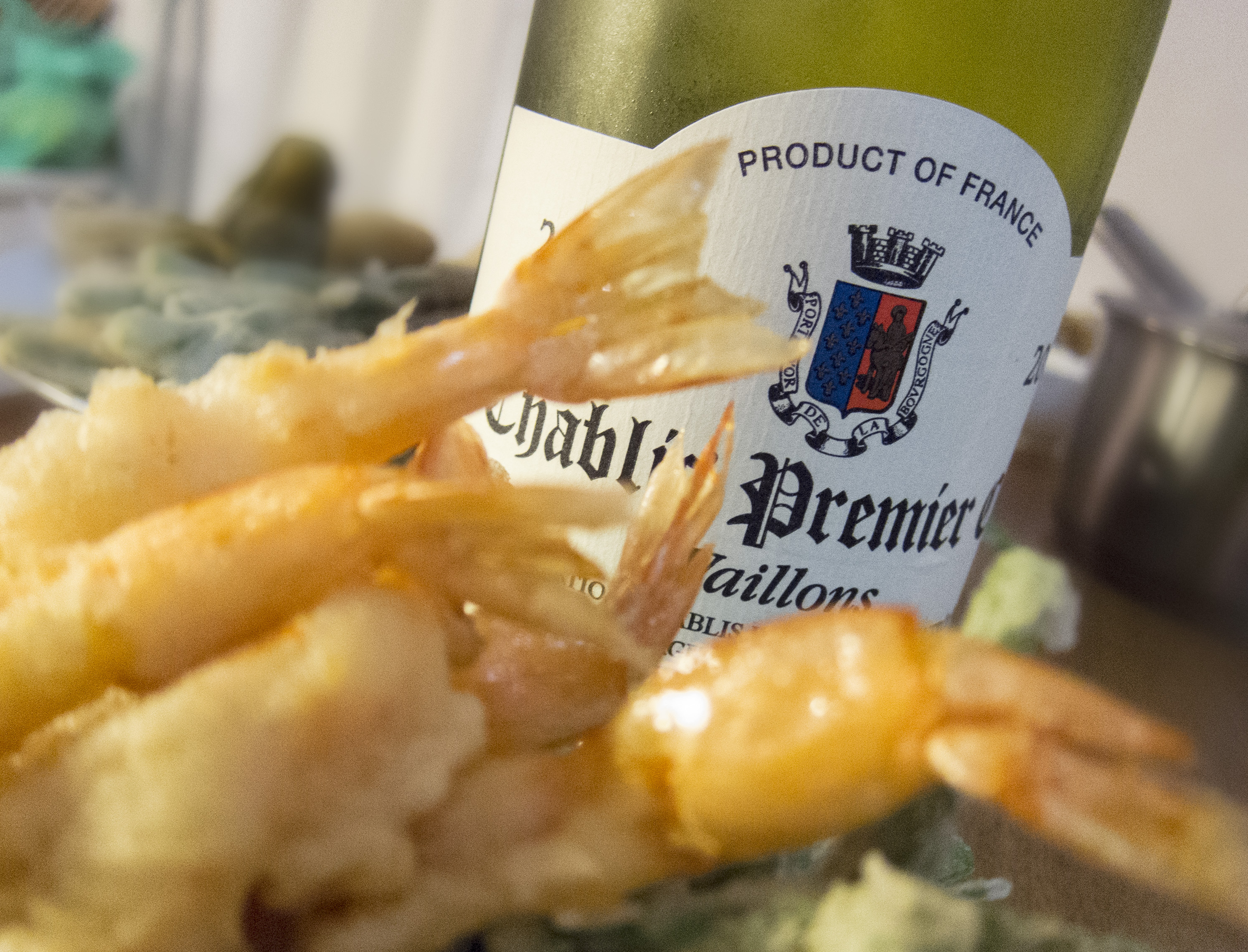
I figured a nice, mineral 1er cru from Chablis would go great with the shrimp (and it did!), but the acidity also cut through the greasy fish beautifully.
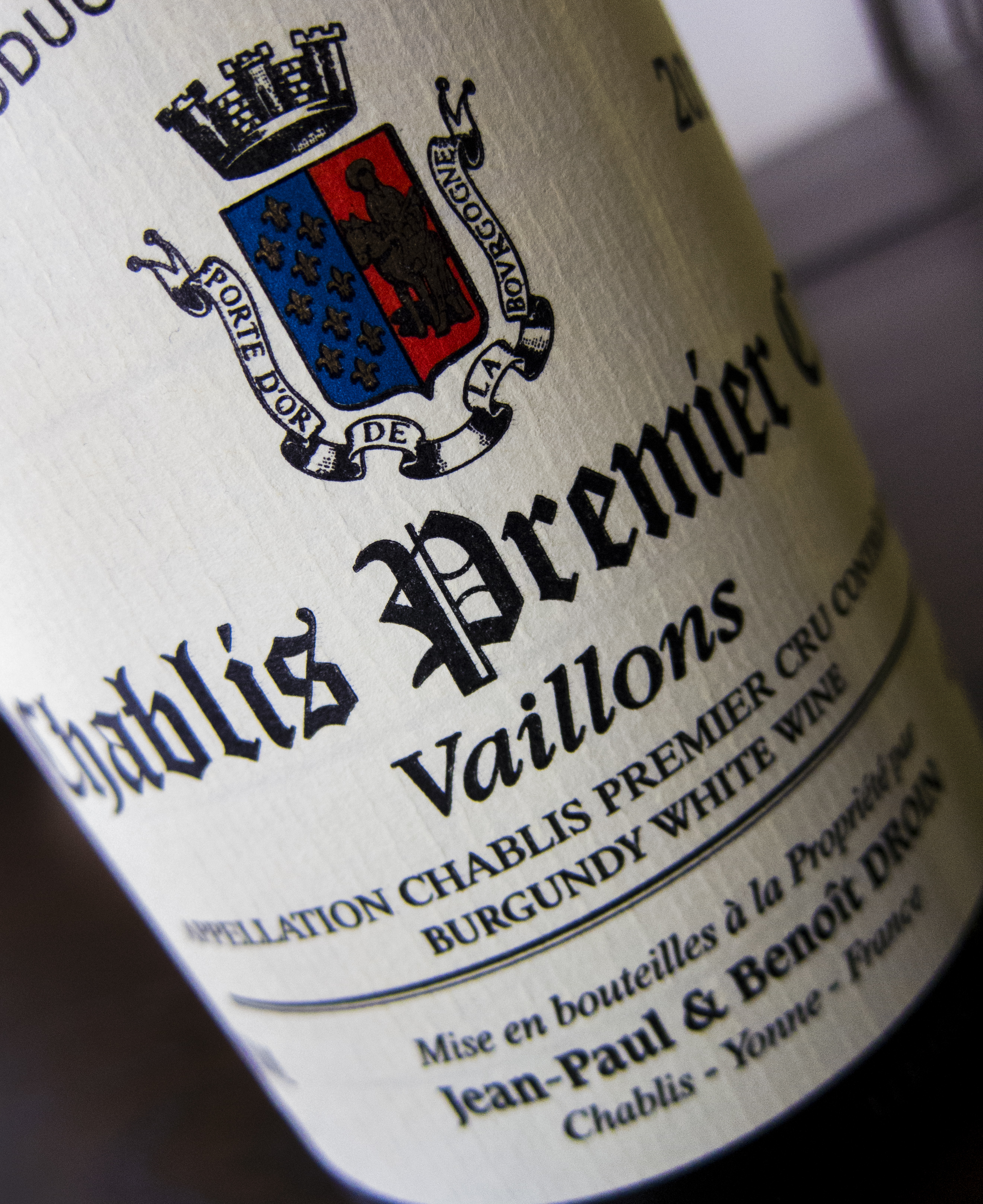
The clear winner : Droin’s Chablis 1er cru Vaillons!
Abalone Sashimi (Awabi)
March 30th, 2013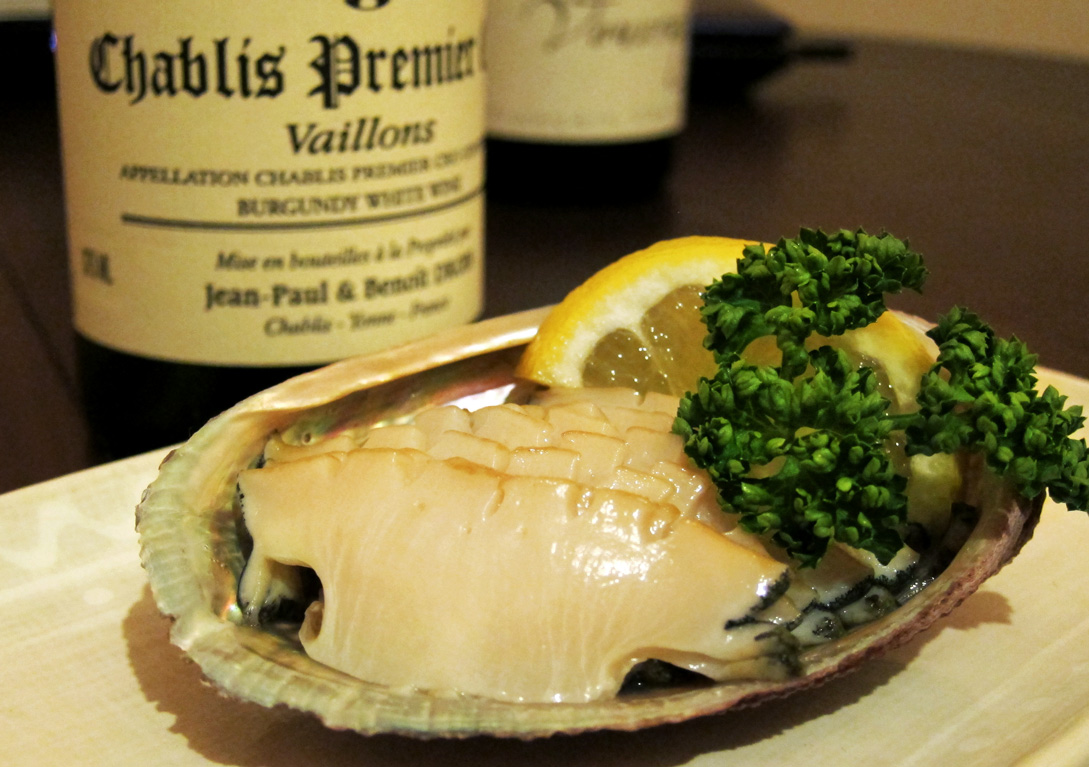
While Abalone is not so common in the West, it is considered one of the very finest shellfish in most Asian countries, including Japan where it is called awabi.
Swiss Chasselas & Sashimi
March 23rd, 2013As the Swiss often like to say, the reason you can’t find Swiss wine outside of Switzerland is that they drink it all themselves. Well, I had the chance to swing by Lucerne for work, and so I filled my small suitcase with a few bottles.
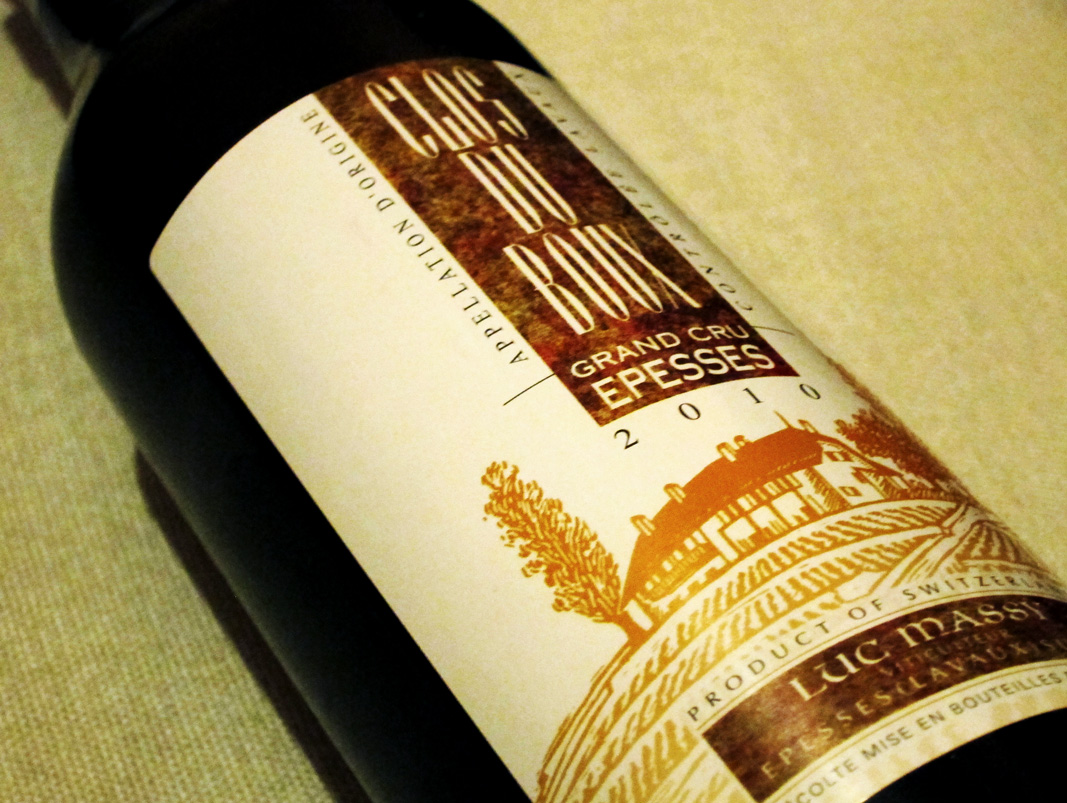
Luc Massy 2010 Clos du Boux Grand Cru Epesses (Lavaux)
Ask American Sommeliers
The Serious Eats website asks as few american sommeliers what their ideal sushi wines are. It seems that Champagne comes back a lot, as well as Burgundy whites such as Chablis.
Hinamatsuri – Girl’s Day
March 3rd, 2013March 3rd is hinamatsuri in Japan, a day for celebrating girls, coming just two days before children’s day, which is reserved for the boys. On girl’s day, households exhibit traditional dolls and prepare specific dishes. We went with chirashizushi (a large sushi rice platter with various toppings mixed in), hamaguri no osuimono (clam in broth) and threw in some tai (snapper) which is a general celebratory dish.
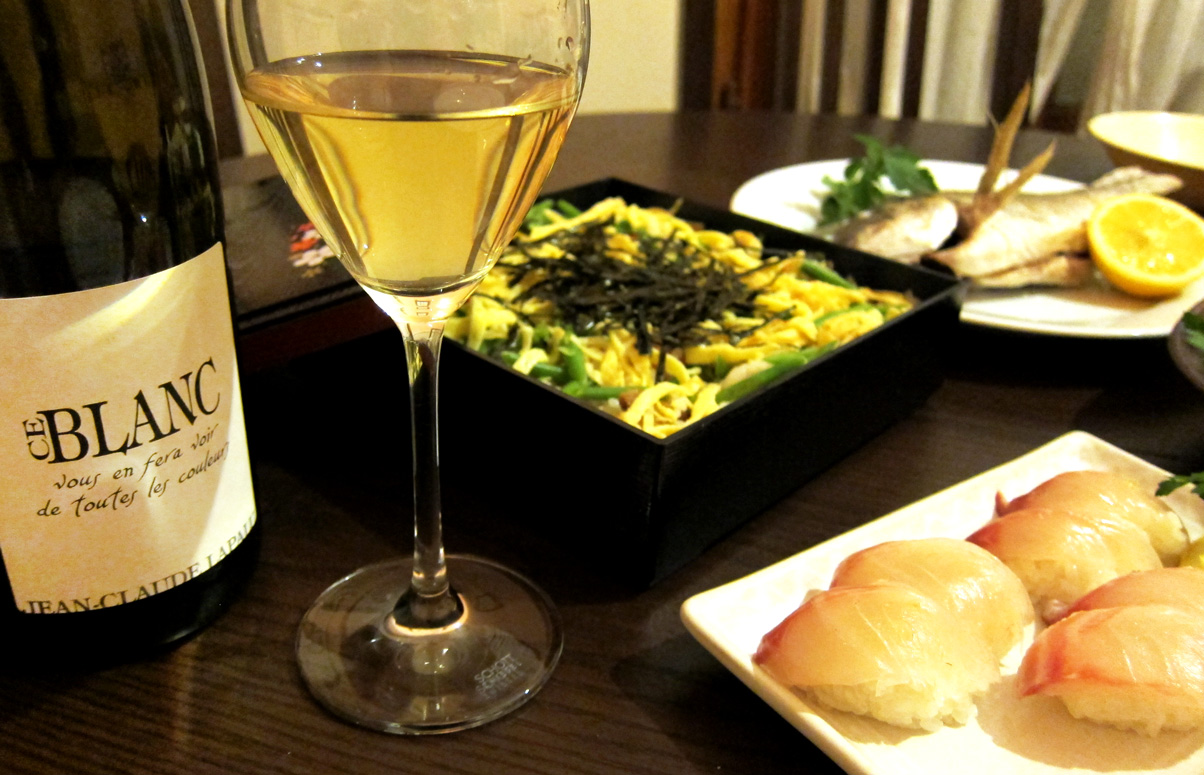
Behind the glass of wine is the chirashizushi served here in a large bento.
Japanese Salmon Dishes
March 1st, 2013I invited some colleagues over from work for a casual wine tasting at my place. Everyone brought one bottle, which would be served blind, and the theme was Salmon pairing. Mizuki prepared a variety of Japanese salmon dishes to try with the different wines, including salmon sashimi, nigiri sushi, shiozake (grilled salted salmon) and misozuke (grilled miso-marinated salmon).
Salmon Sashimi and Marsannay Rosé
February 10th, 2013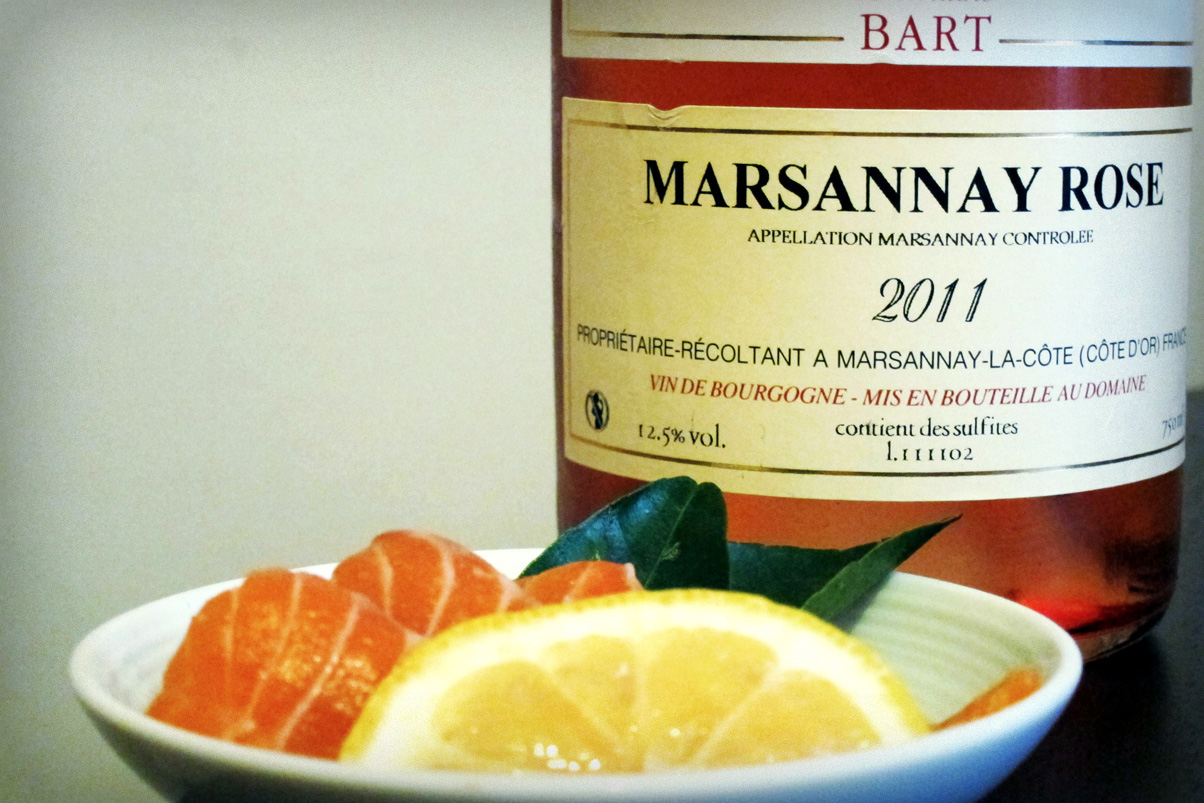
I’ve found that raw salmon can be somewhat difficult when pairing sushi or sashimi with wine. Many wines will accentuate the fishy flavors, leaving a very unpleasant aftertaste. Finding the right match is extremely important, especially considering that salmon is a key component in mixed sushi and sashimi sets.
Beaujolais Nouveau 2012
November 18th, 2012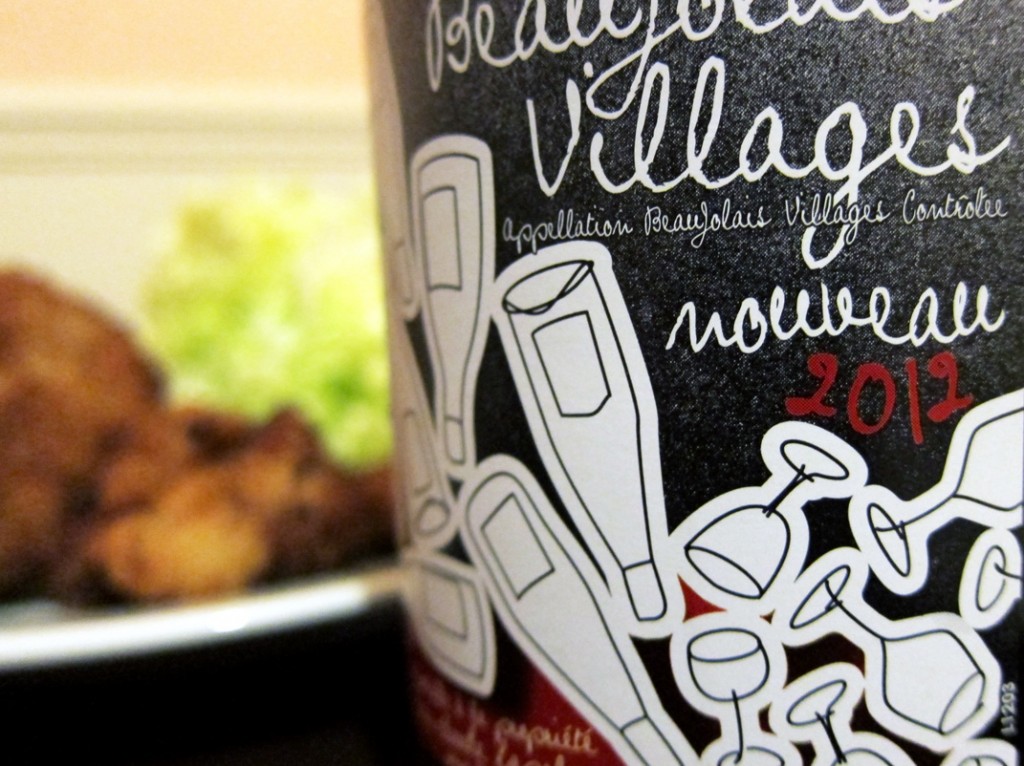
It’s that time of the year again, when the first Beaujolais wines of the vintage are released under the “nouveau” appellation. While some consider it a marketing gimmick, my take is that any excuse to celebrate wine, even young wine, is a good one. The Japanese seem to agree with me, as Beaujolais Nouveau is still a big deal, whereas it has lost quite a bit of steam over in the west. In fact, the average Japanese person drinks wine twice a year: for the release of Beaujolais Nouveau, and at Christmas where Champagne is de rigueur (that’s right, Christmas, not New Year’s Eve).
Tequila meets Tempura!
October 14th, 2012Even if this site is all about pairing japanese dishes with wine, it’s fun to try something new from time to time. And I guess this is still a “western” drink, so here goes: Tempura meets Tequila!
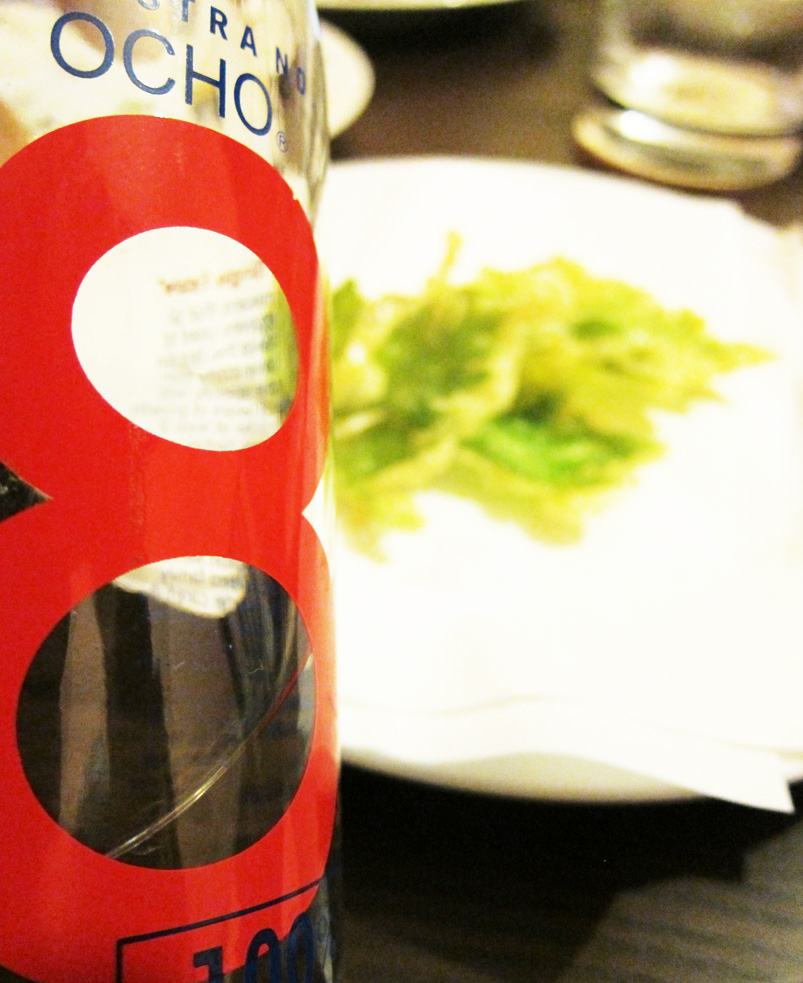
Tequila Ocho 2011 “El Puertiecito”
Osechi – japanese new year’s dishes
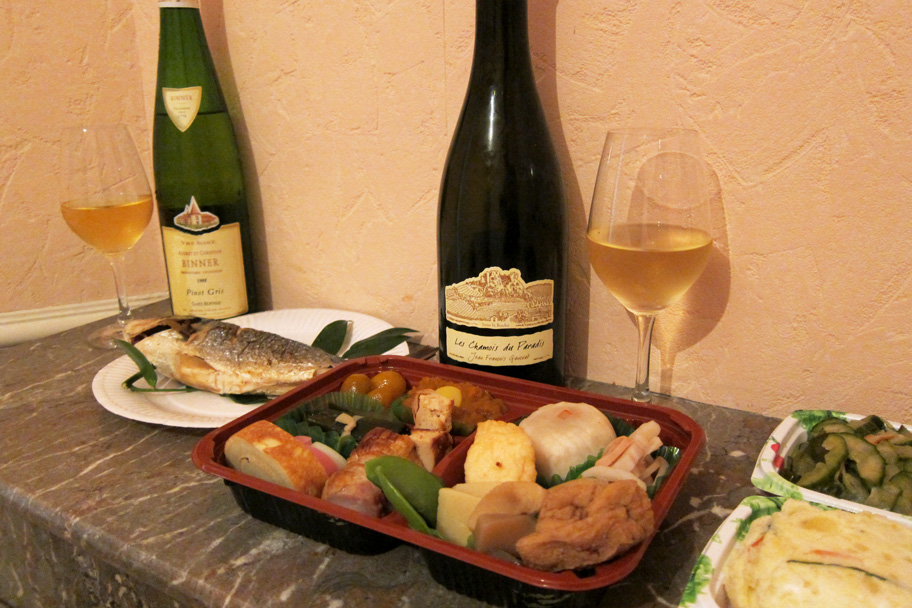
January 2nd, 2012Osechi is a traditional Japanese set of dishes which is prepared for the new year festivities. Usually presented in bento-type boxes which are stacked on top of each other, typical osechi are foods which are pre-cooked and eaten cold over the first three days of the year, a period during which the women of the house are busy entertaining family members and guests, leaving little time for preparing meals.